.png)
Ocean Observatories Initiative Shutdown — Here's What We Stand to Lose

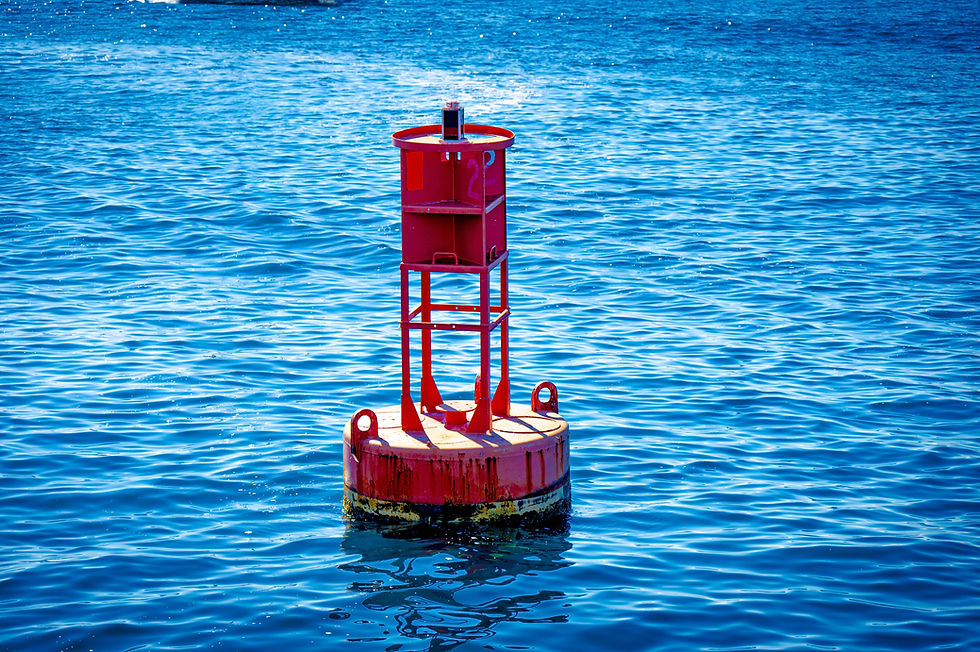
For over a decade, a network of sensors scattered across the deep ocean has been quietly tracking the currents that regulate our climate, the ecosystems that sustain our fisheries, and the ocean chemistry that determines how much of our carbon pollution the sea can absorb. That watch is now being called off.
Last month, the National Science Foundation quietly announced it was pulling the plug on the Ocean Observatories Initiative — a web of more than 900 underwater instruments that has been measuring ocean temperatures, currents, marine biodiversity and climate signals without interruption since 2016. The price tag to build it: $368 million. The cost of losing it, scientists warn, is far harder to calculate.
The NSF issued its "descoping" notice on May 21; just days after the Trump administration dismissed every member of the independent board charged with overseeing the foundation. The shutdown targets sensors stationed in some of the most scientifically critical stretches of ocean on Earth: waters off the Pacific Northwest, Alaska, and the Carolina coast, as well as the Irminger Sea, the remote body of water tucked between Greenland and Iceland where deep Atlantic circulation begins.
What Scientists Lose When the Ocean Observatories Initiative Goes Dark
The Ocean Observatories Initiative was irreplaceable in a way that most people never had reason to think about. Hilary Palevsky, a professor of marine biogeochemistry and oceanography at Boston College who has relied on its data, described what the scientific community is now facing.
"Over the more than 10 years that these things have been deployed, they've just gotten better and better at it. And so the data return has also gotten better and better over time," she said.
"The scientific community was really just getting to the point of being able to capitalize on the data that had been collected so far. I'm really disappointed for the continuation of this important data set."
That data has contributed to research on biological production in the ocean, carbon sequestration, deep-ocean processes, marine ecosystems and fisheries. It has also helped scientists monitor the Atlantic Meridional Overturning Circulation — the system of Atlantic currents, commonly called AMOC, that studies now suggest may be more vulnerable to collapse than previously thought, with potentially devastating consequences for the global climate.
A Gap That May Not Be Filled
Perhaps the most alarming warning from scientists involves not just the data being lost, but the human expertise that disappears along with it. "If we want to put [the instruments] back out again, we need people who know how to do it and the team that knows how to do it is being dismantled along with the infrastructure program itself," Palevsky said. "We're potentially at risk of having a gap in our ability to regain the expertise to do things that we had sort of just figured out how to pull off."
The OOI's principal investigator, Jim Edson, confirmed the network faces a phased shutdown over the next 15 months. "As infrastructure is recovered from each array, the associated real-time data streams and observing capabilities at those locations will come to an end," Edson said of a system he described as having "delivered the world's most advanced continuously operating ocean observing systems."
What Do We Lose? Why Should People Care?
The ocean is not a separate system from human life. It determines whether hurricanes intensify before they hit shore. It shapes the rainfall that fills reservoirs and waters crops. It regulates the fish populations that coastal economies depend on. The OOI was the country's best tool for getting early, continuous readings on all of it and that data didn't just sit in scientific journals. It fed into storm forecasting, fisheries management, and the long-range climate modeling that informs decisions about infrastructure, insurance, and emergency preparedness.
The shutdown also comes as the Trump administration has pushed to expand deep-sea mining and loosen fishing regulations — moves that, without robust ocean monitoring, will be impossible to evaluate for their environmental impact. You cannot manage what you cannot measure.
For Palevsky, the stakes extend to every family trying to make sense of a climate that feels increasingly unpredictable. "As we reduce the amount of data that we have, the observations, as well as the science more generally to understand what's happening in the climate system, it makes it much harder for us as a society to understand what we're facing and what we need to do to plan for and adapt to it," she said. In other words: less data doesn't mean less change. It just means less warning.


Comments