.png)
Rural Farmers Are Turning Away From Trump as Farm Bankruptcies Surge and Costs Spiral

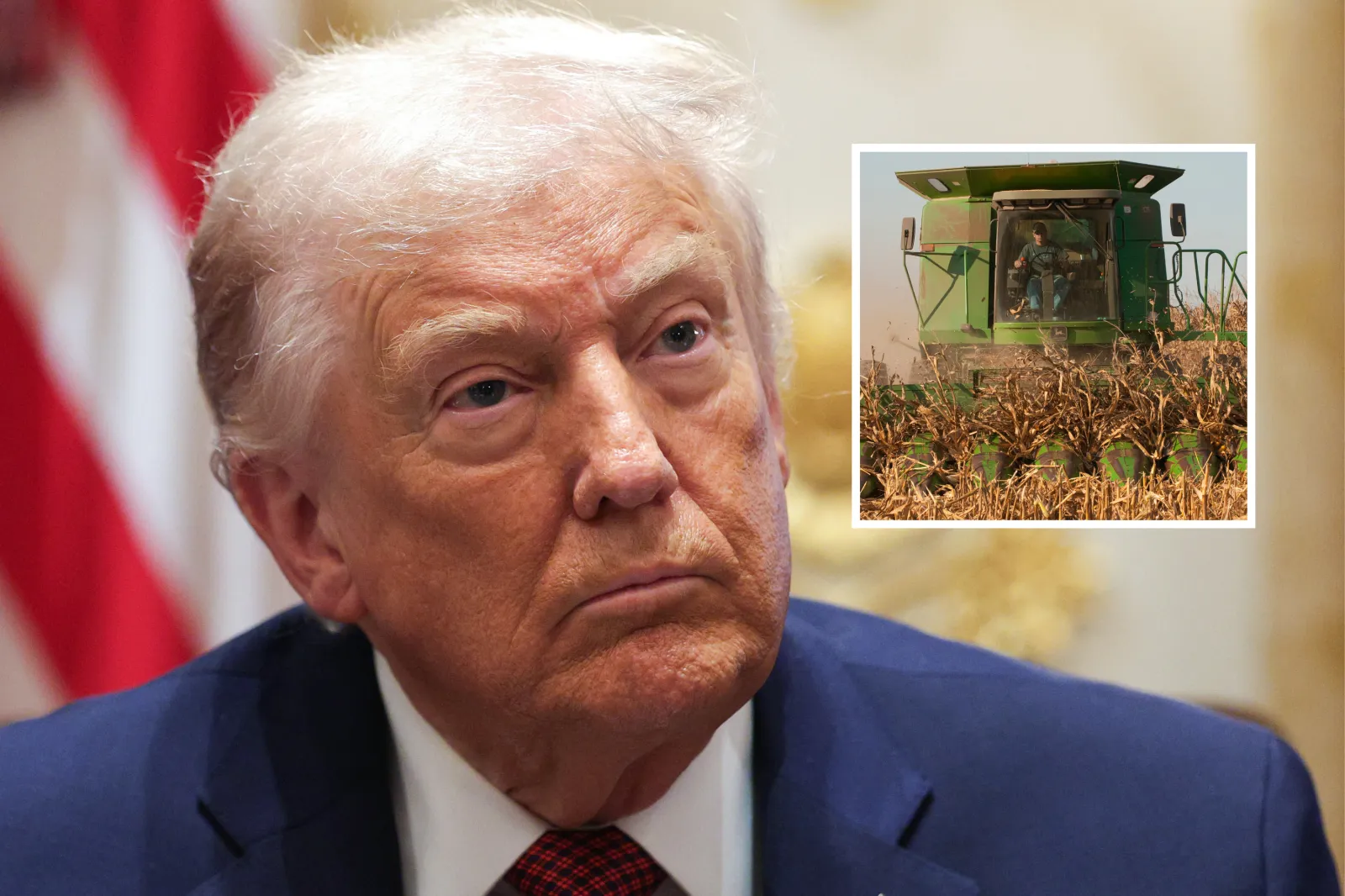
For years, rural America has been one of the most reliable pillars of Donald Trump's political base. But a new national poll suggests that foundation is cracking — and farmers say their bank accounts explain why.
A Fox News poll released this week found that Trump's net approval rating among rural voters has dropped a stunning 34 points since early 2025, swinging from +20 to -14. Among rural white voters specifically, the decline is nearly as sharp — a 33-point fall from +27 to -6. It marks the first time in this polling series that Trump has fallen into negative territory with rural Americans.
The poll, conducted May 15–18 among 1,002 registered voters nationwide, was jointly run by Beacon Research, a Democratic-leaning firm, and Shaw & Company Research, a Republican-leaning firm. Respondents were reached by landline, cellphone, and online text surveys drawn from a national voter file. The margin of error is plus or minus 3 percentage points.
What the Numbers Show
Trump's overall approval rating in the survey stands at 39 percent — just one point above the lowest point recorded in this polling series. But the story beneath that headline number is more striking. Support has softened across several of his most loyal voter groups, with rural Americans and rural white voters now registering their lowest approval levels in the entire series.
On the economy — often considered a defining issue for voters — only 29 percent of all respondents approved of Trump's handling, while 71 percent disapproved. Rural voters tracked almost identically: 30 percent approval, 70 percent disapproval.
Inflation is where Trump's numbers are weakest. Just 24 percent of all voters approved of how he has handled rising prices, with 76 percent disapproving. Among rural voters, 28 percent approved and 71 percent disapproved — a troubling sign given that rural communities are especially exposed to fuel and food production costs.
Republican pollster Daron Shaw, who co-conducts the Fox News poll with Democrat Chris Anderson, described what he sees happening inside Trump's base.
"Despite consistently strong GOP support, the president's numbers are leaking a bit. Make no mistake; it's all about affordability. Independents jumped ship in 2025, and now non-MAGA Republicans and other core constituencies are wavering."
Even on border security — one of Trump's historically strongest issues — the numbers have shifted. Nationally, voters now disapprove of his handling by a slim 51 to 49 percent margin, the first time this issue has tipped negative during his current term. Rural voters remain slightly favorable on the issue at 54 to 45 percent approval, but that too represents a narrowing of what was once a comfortable lead.
Farmers Are Feeling It First
Behind the polling shift is a grinding financial reality facing America's farm communities. According to the American Farm Bureau Federation, farm bankruptcies surged 46 percent in 2025 compared to the year before — a sign of how badly rising costs and market disruptions have hit agricultural producers.
In 2026, those pressures have only grown. The escalation of conflict involving Iran has pushed up fertilizer and diesel prices, two of the most critical inputs for farming operations. When energy costs rise, farmers — who rely heavily on both fuel and fertilizer — feel it immediately in their profit margins.
Willis Nelson, a Louisiana farmer, described the situation plainly in comments to MS Now.
"We're not financially able"
to operate as his family normally would, Nelson said, explaining they have been forced to cut back on fertilizer because "we just don't have the margin." His multigenerational farm is now facing the prospect of bankruptcy, and he put the weight of that reality into simple terms: "It's tough, you know, very tough on us."
Ohio farmer Fred Yoder offered a similarly bleak picture in comments shared by Farm Action from an interview with US Farm Report, putting precise dollar figures to the pain.
"It's costing us about $1,500 of cash per day to run two tractors. I spent many years buying potash for $90 a ton, and now it's $670 to $700 a ton. Our big problem is the input costs. I haven't seen anything this bad since the 1980s."
Trade dynamics have added another layer of trouble. Demand from China for American soybeans and other agricultural exports has declined amid ongoing trade tensions, leaving many farmers with weaker prices and fewer places to sell their goods.
Adding to the unease, Trump's comments during a recent trip to Beijing drew attention from farming communities. Trump argued against restricting foreign purchases of U.S. farmland, saying such limits would reduce land values — a position that unsettled farmers who are already worried about foreign ownership of American agricultural land.
Why This Matters for Elections
Rural voters are not just a symbolic part of the Republican coalition — they are a structural one. In many Senate and House races, particularly in midwestern and southern states, rural turnout and margins can determine which party controls Congress. Even a modest shift in enthusiasm or vote share in these communities could have significant downstream effects in this year's midterm elections.
The April-to-May drop alone — a 16-point swing in net approval among rural voters in a single month — suggests the deterioration is accelerating rather than leveling off.
The White House pushed back on the poll's implications, arguing the numbers reflect a temporary moment rather than a durable trend. Spokesman Kush Desai said the economy has remained "resilient" under Trump and predicted better days ahead.
"As this agenda continues taking effect, and as Congress passes more of the president's healthcare and housing affordability agenda, the best is yet to come in the second Trump term."
Spokesman Davis Ingle pointed to Trump's 2024 election victory as the more meaningful data point, saying "the ultimate poll was November 5th 2024 when nearly 80 million Americans overwhelmingly elected President Trump to deliver on his popular and commonsense agenda." Ingle added that the administration is "working tirelessly to create jobs, cool inflation, increase housing affordability, and more," and that progress made so far is "just the beginning."
For rural voters watching their operating costs climb and their neighbors file for bankruptcy, the question of whether that progress arrives — and how soon — may carry serious political weight.


Comments